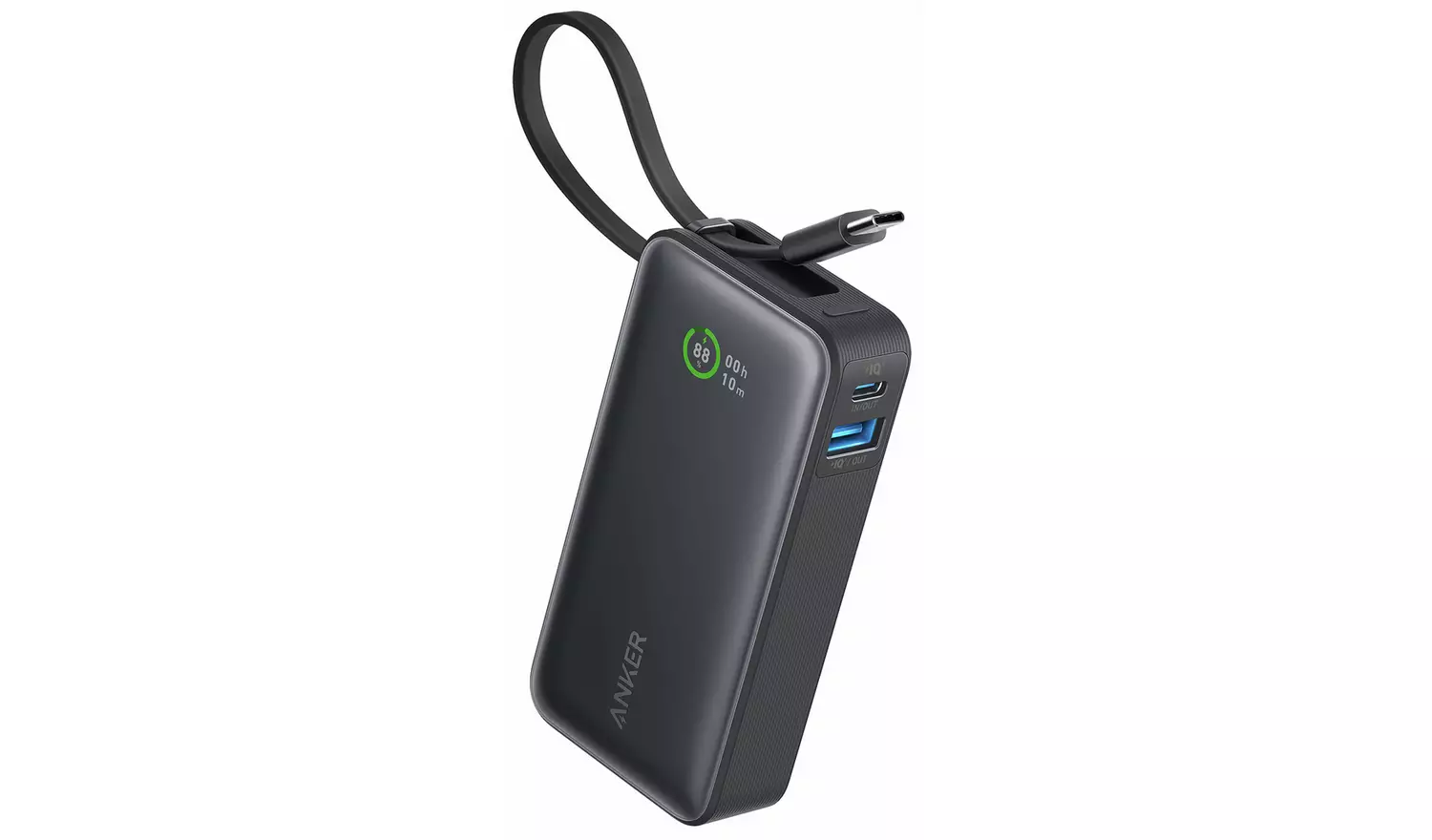
The best thing about the Anker Nano Power Bank is also the thing that defines its limitation: the USB-C cable is built in. For me, that is a genuinely sensible idea. A 10,000mAh battery is only useful when it is in the bag, and a power bank with its own lead removes one of the most irritating little failures of portable charging: remembering the battery but forgetting the cable.
There is more to it than that single convenience, of course. Anker specifies a 10,000mAh capacity, up to 30W USB-C output and a charging-status display. Those are the right basics for a compact everyday battery, rather than a huge emergency pack intended to run several devices for days. But the built-in cable remains the deciding feature. Buy this because you want a neater USB-C charging solution, not simply because it has a familiar capacity figure on the box.
A cable you do not have to remember
I like products that remove friction without turning a simple job into a clever gimmick. Integrating the lead does exactly that. It keeps the package tidier, avoids loose-cable clutter and makes this a much more appealing option for quick top-ups away from a plug socket.
It also makes the connection choice important. This is a USB-C-focused power bank, so it is the natural fit for devices that charge over USB-C. That sounds obvious, but it is the caveat that matters most here. Anyone relying on another connector, or needing confirmed support for a particular device, should establish that before buying rather than treating the attached cable as universally useful.
Before buying, I would confirm device compatibility, recharge details, size and exactly what the display shows on Anker’s product page where they affect the device you intend to carry or charge.
30W is useful, but compatibility still decides the result
Anker lists USB-C output of up to 30W. That gives this model more purpose than a basic slow-charge backup battery and should make it a stronger match for compatible USB-C devices that can accept that level of power. It also means the Nano is not merely selling convenience; it has a stated output that is relevant to people who do not want their backup battery to feel painfully limited.
My main reservation is that “up to” is not a promise of one identical result with every phone, tablet or other device. The device being charged sets its own requirements, so the headline figure is not a shortcut to knowing its charging speed. Do not buy on the assumption that 30W automatically means a specific charging speed. Confirm your device’s USB-C charging requirements first.
The 10,000mAh figure needs a similarly sensible reading. It is the manufacturer’s stated battery capacity, not a guaranteed amount of energy delivered into every connected device. Real usable capacity depends on the charging system and the device involved, so I would regard this as an everyday reserve for top-ups rather than make promises about a precise number of charges.
The display is a small feature with real value
A charging-status display is specified, and I am pleased it is included. Power banks are frustrating when their remaining charge is vague: a few indicator lights often tell you only that the battery is somewhere between healthy and nearly empty. A display has the potential to make this more predictable, which matters when the whole point is leaving home with backup power you can rely on.
I would treat the display as a useful status feature rather than the main reason to buy. If detailed power, input or output readouts are important to you, confirm those in Anker’s specifications; the built-in cable is the stronger reason to choose this format.
What buyers say needs taking seriously
Amazon.co.uk’s AI-generated customer-feedback summary identifies the built-in cable and compact, travel-friendly form as positive themes. That fits neatly with the appeal of the integrated cable: people clearly value a power bank that is easier to pack and carry. It is supporting customer feedback rather than an editorial performance result, but it reinforces the product’s core idea.
There is a less flattering side to that same feedback. The Amazon customer-feedback summary notes mixed opinions on charging speed and reports of reliability concerns. I would not turn those comments into a claimed fault rate or a confirmed design defect; they do not prove either. They are, however, a fair reason not to overstate the proposition. Convenience is excellent only when the battery remains dependable, and buyers who place reliability above all else should weigh that feedback carefully.
Pros and cons
What I like
- The integrated USB-C cable solves a real everyday carrying annoyance.
- Anker specifies a useful 10,000mAh capacity for an everyday backup battery.
- Up to 30W USB-C output gives it more headroom than a very basic portable charger.
- A charging-status display is a worthwhile inclusion.
My reservations
- The built-in cable is only a benefit when USB-C is the connection you actually need.
- Charging results depend on the connected device; the stated 30W is not a universal outcome.
- Amazon buyer feedback includes mixed views on charging speed and some reliability concerns.
- The supplied information does not confirm size, weight, recharge performance or detailed compatibility.
Who should buy it?
I would recommend it to someone who charges USB-C devices and wants a straightforward power bank that keeps the essential cable attached. For commuting, travelling or simply carrying a backup battery without a tangle of accessories, that is a better proposition than it first sounds. The status display and stated 30W output make the package more convincing.
I would buy something else if you need a confirmed connection for a non-USB-C device, need verified support for a specific device, or prefer a model with more clearly established real-world performance and durability evidence. The one condition that changes my recommendation is simple: your main device must charge through USB-C and be compatible with the charging arrangement Anker specifies.
A sensible mains companion
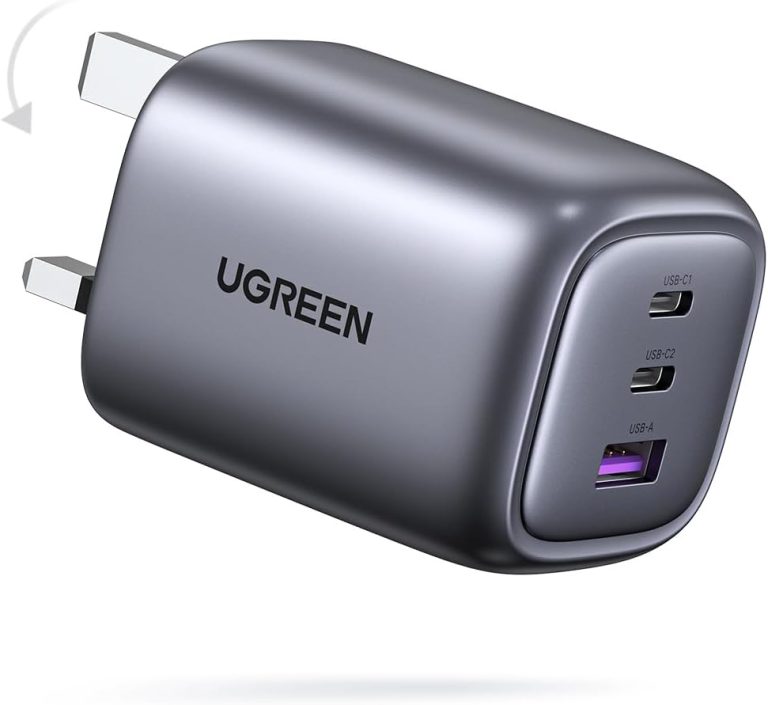
For mains charging at home or on the road, the UGREEN Nexode 65W 3-Port GaN Charger is presented as a companion product rather than a replacement for this battery. Confirm the current port and charging specifications from both manufacturers before pairing them. The information here does not establish a particular charging combination or performance result.
Would I buy it?
Yes, for the right USB-C setup. I think the built-in cable is a better idea than another generic portable battery asking me to carry yet another lead. Anker’s stated 10,000mAh capacity, up to 30W USB-C output and display give that convenience proper substance.
But I would not overlook the mixed customer feedback, nor would I choose it blindly for every device. This is a tidy, well-judged power-bank format for USB-C users who value simplicity. Anyone with unusual compatibility needs, or zero tolerance for the reliability concerns raised in buyer feedback, should choose a more thoroughly confirmed alternative.
Affiliate disclosure: this article may earn a commission if you buy through the link below, at no extra cost to you.